Social media has evolved beyond simply being a means of communication. With over 5 billion users, social media platforms allow users to share information. As a result, social media platforms become a goldmine of data. This data has become useful metrics that guide decision-making across several industries. However, collecting social media data is not as easy as it sounds since most of the platforms prohibit the use of bots and scrapers. Therefore, understanding how to scrape social media with the right tool can be the difference between getting data or being blocked. So, what is the way forward?
This guide will explore how to scrape social media data, key benefits, and the best social media scraping tools
What is Social Media Scraping?
Before moving forward, let us briefly discuss the question: what is social media scraping?
Social media scraping is the process of extracting publicly available data from social media platforms like Facebook, Instagram, TikTok, X (formerly known as Twitter), LinkedIn, YouTube, and others.
In the past, this process was manual – humans had to manually copy, sort, organize, and store the extracted data. However, this method is time consuming and prone to several errors. This led to the development of various social media scraping tools that automate and streamline data collection from these platforms.
Some of the publicly available data that can be collected include:
- Profile – Such as usernames, bios, display names, profile pictures, following/follower count, location.
- Posts – Text post, images, videos, caption, timestamp.
- Engagement metrics – Number of views, likes, comments, and retweets.
- Comments – comment texts, username of commenter, timestamps, replies, likes, views.
- Hashtags – Trending tags, posts, top content
- Marketplace data – product titles, descriptions, prices, images, and seller details.
Why Scrape Social Media Data?
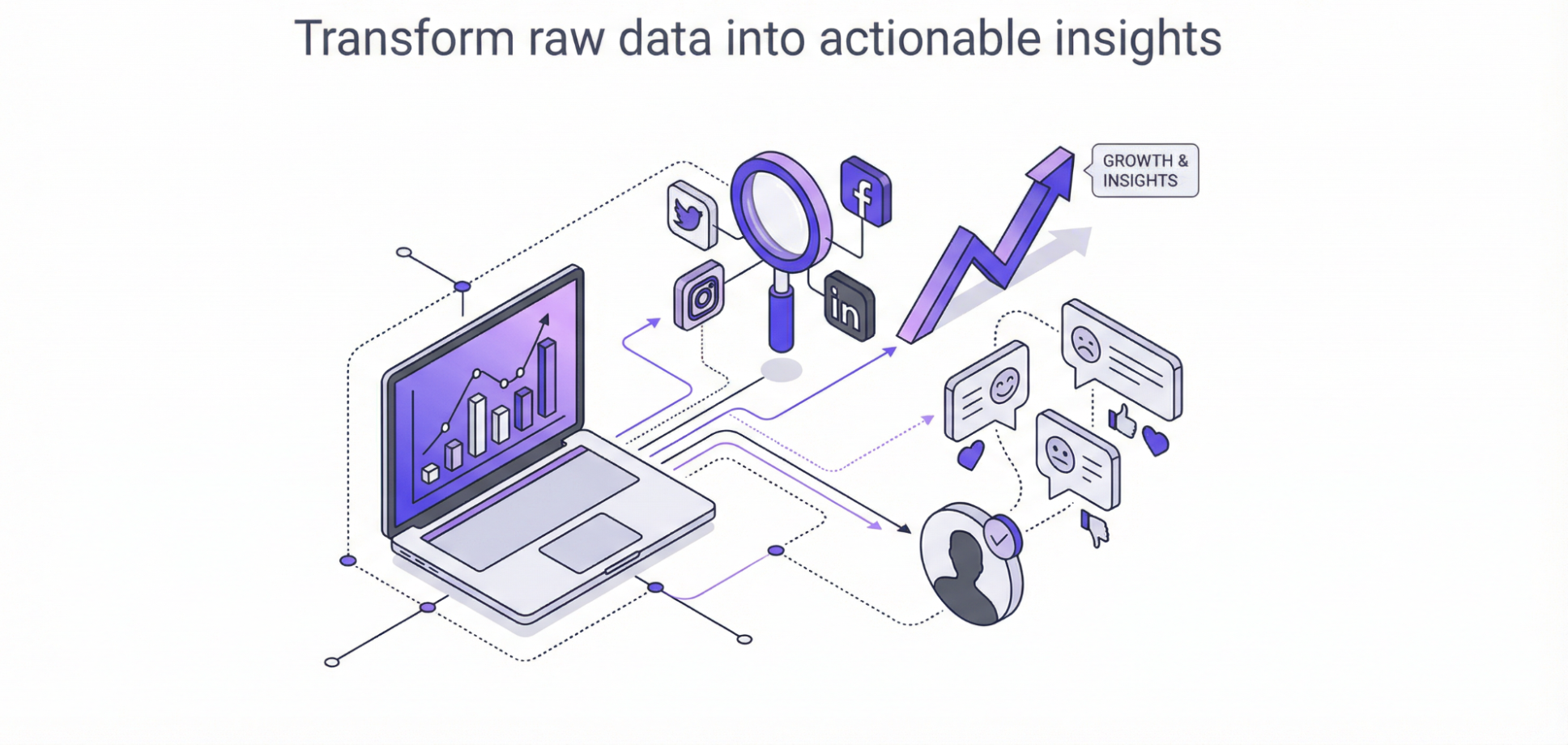
Scraping social media data is a way to transform raw data into actionable insights. Here are some benefits of scraping social media data:
Business Intelligence
Collecting data from various social media platforms can be used for business intelligence in many ways. Brands can collect data to monitor competitors’ social media strategies, keywords, and hashtags on highly performing content as well as customer engagement. Subsequently, this provides useful insights into how to optimize their social media presence for better visibility and content performance.
Sentiment Analysis
Collecting data from social media platforms is a way to understand how the public perceives a brand. Many users are not shy to talk about their experiences- either positive or negative. Subsequently, this provides an avenue for brands to monitor product or service perception. More so, it is a smart way to manage brand reputation by promptly responding to complaints. In addition, a surge in negative comments indicates the need for immediate action to protect brand reputation.
Lead Generation
Social media data extraction plays a crucial role in lead generation. Brands can leverage the data to identify potential leads for different purposes. For example, LinkedIn extraction can be used to generate leads that can be used in cold email campaigns. It could also be used to identify potential brand ambassadors within their niche for optimized marketing activities.
Trend Analysis
Another reason why people scrape social media data is for trend analysis. Most trends begin and spread on social media platforms. Therefore, brands that want to stay ahead of their competition need to extract data that allows them to track trends or hop on new trends as required.
How to Scrape Social Media Data
There are several ways to extract data from social media platforms. Depending on budget, skills, and social media platforms, you can choose no-code tools, web scraping APIs, or custom-built scrapers.
Custom-built Scrapers
This option requires good coding skills as it involves using programming languages like Python, JavaScript, C++, and others. However, the most popularly used option is Python for reasons like:
- Ease of use
- Extensive documentation
- Powerful web scraping libraries
- Active community
Using programming languages to build a script for data extraction has a steep learning curve. You also need to choose and buy good social media proxies, handle pagination, as well as bot detection techniques. Therefore, this choice is only suitable for organizations that have an in-house programmer that can build and maintain the scraper.
Pros
- Flexibility: You can build your social media scraper to suit your data collection needs.
- Bypass API restrictions: With these scripts, you are not restricted to rate limits, which ensures frequent data collection.
- Automation: These tools automate the extraction of large volumes of data which allow humans to focus on other important tasks
- Comprehensive data collection: These scripts provide access to comprehensive data unlike APIs that are limited to certain fields.
Cons
- Learning curve is quite steep
- Building a custom script requires excellent coding skills
- Anti-scraping measures must be considered when making these scripts
Web Scraping APIs
Some social media platforms have official APIs that facilitate the extraction of publicly available data. They are a safe and reliable method to get structured data from platforms. However, they come with rate limits, which may make the process slower. In addition, they offer less flexibility since they are less customizable.
There are several unofficial scraping APIs that allow you to collect data by making an API request to the social media platform’s infrastructure. Usually, they come with built-in proxies for IP rotation. Although they are highly customizable, users need to have some programming skills. As a result, they are unsuitable for those that are not tech-savvy.
Pros
- Access to structured data: APIs provide data in a structured format, usually JSON or XML, which makes it easier to use for analysis.
- Reliability: Since APIs are designed for communication between servers, they offer more stability.
- Authorized access: APIs often require authentication, which ensures secure access to the data on the social media platforms.
- Legal and ethical compliance: Using an official API ensures your activities remain within legal and ethical boundaries. This ensures continuous access to the platform with fewer chances of being blocked
Cons
- Limited access to data when you need to extract beyond what is available to the API
- Most APIs impose limits on the number of requests within a period
- Understanding how to use APIs requires technical expertise
No-code Social Media Scrapers
The last category is the no-code scrapers. Many providers provide tools that come with pre-made templates for social media platforms. These no-code scrapers are beginner-friendly solutions as you don’t need to have programming knowledge.
In addition, no-code social media scrapers are easy to use. They can extract data within a few minutes with only a few steps involved. Another advantage of this option is that it is time-saving and can be easily integrated into existing systems for optimized workflow.
Since more people understand the significance of data to business operations, there has been an influx of no-code scrapers. Therefore, it is necessary to consider factors like performance, cost, ease of use, documentation, and support before investing in any of these tools.
Pros
- Easy to use: Most of these no-code scrapers offer a point and click interface, which makes them easy to navigate.
- Accessibility: Anyone, regardless of technical knowledge, can use no-code scrapers to extract data from social media platforms.
- Built-in features: They often come with built-in features like proxy management, CAPTCHA solving, and others to bypass anti-scraping measures.
- Integration: These tools can easily be integrated into existing systems like Google Sheets or Zapier for prompt analysis
Cons
- Quality depends on the service provider
- Great for small tasks but can quickly become expensive for high volume scraping depending on provider
Where to Get A Social Media Scraper?
One of the most reliable places to get a no-code social media scraping solution is Floppydata. This provider incorporates features that bypass CAPTCHA and IP bans for a smooth experience. The Web Unblocker tool from Floppydata is an excellent tool to scale web scraping without the need for automation browsers like Selenium or Playwright.
Floppydata’s Web Unblocker is a tool that simplifies social media scraping by allowing you to extract data in just a few steps. More so, data is delivered in a structured format that is ready for processing and analysis. Some of its features include:
- Automated CAPTCHA solving
- Bypass anti-bot mechanisms with its advanced browser fingerprinting
- Extracts data from dynamic websites efficiently
- Smart retry logic to bypass the need for manual retries
- Built-in automatic proxy rotation to remain anonymous.
One crucial factor to consider when choosing a scraper provider is pricing. Floppydata prioritizes accessibility by providing high-quality solutions at very competitive pricing. However, new users can scrape any 5 social media platforms for free without any financial obligations.
The subscription model has four tiers and they are:
- Growth Plan – From $0.98 per 1k results
- Professional Plan – From $0.75 per 1k results
- Business Plan – From $0.60 per 1k results
- Premium Plan – From $0.45 per 1k results
- Custom Plan – Contact customer support for a customized plan
How to Scrape Social Media Data with Floppydata Web Unblocker
Social media scraping with Floppydata’s Web Unblocker is simple and takes only a few steps. Here is a step-by-step guide to collect data from any social media platform with the Web Unblocker tool:
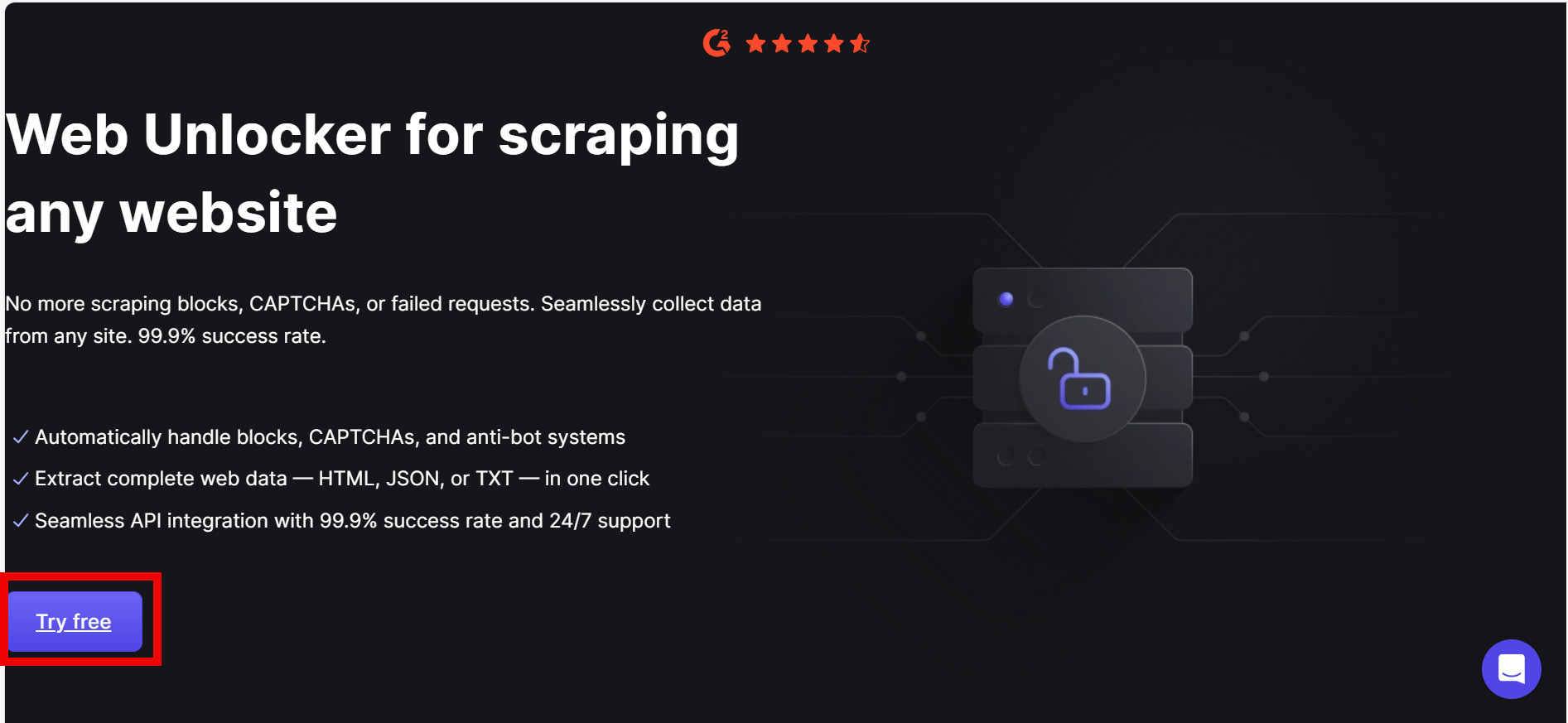
Step 1: Visit the Web Unblocker page and sign in to get started
Step 2: Log in to your social media account. Open a search results page with specific filters that align to your use case.
Step 3: Go to the Floppydata’s Web Unblocker dashboard and paste the URL
Step 4: Your results are ready within a few minutes.
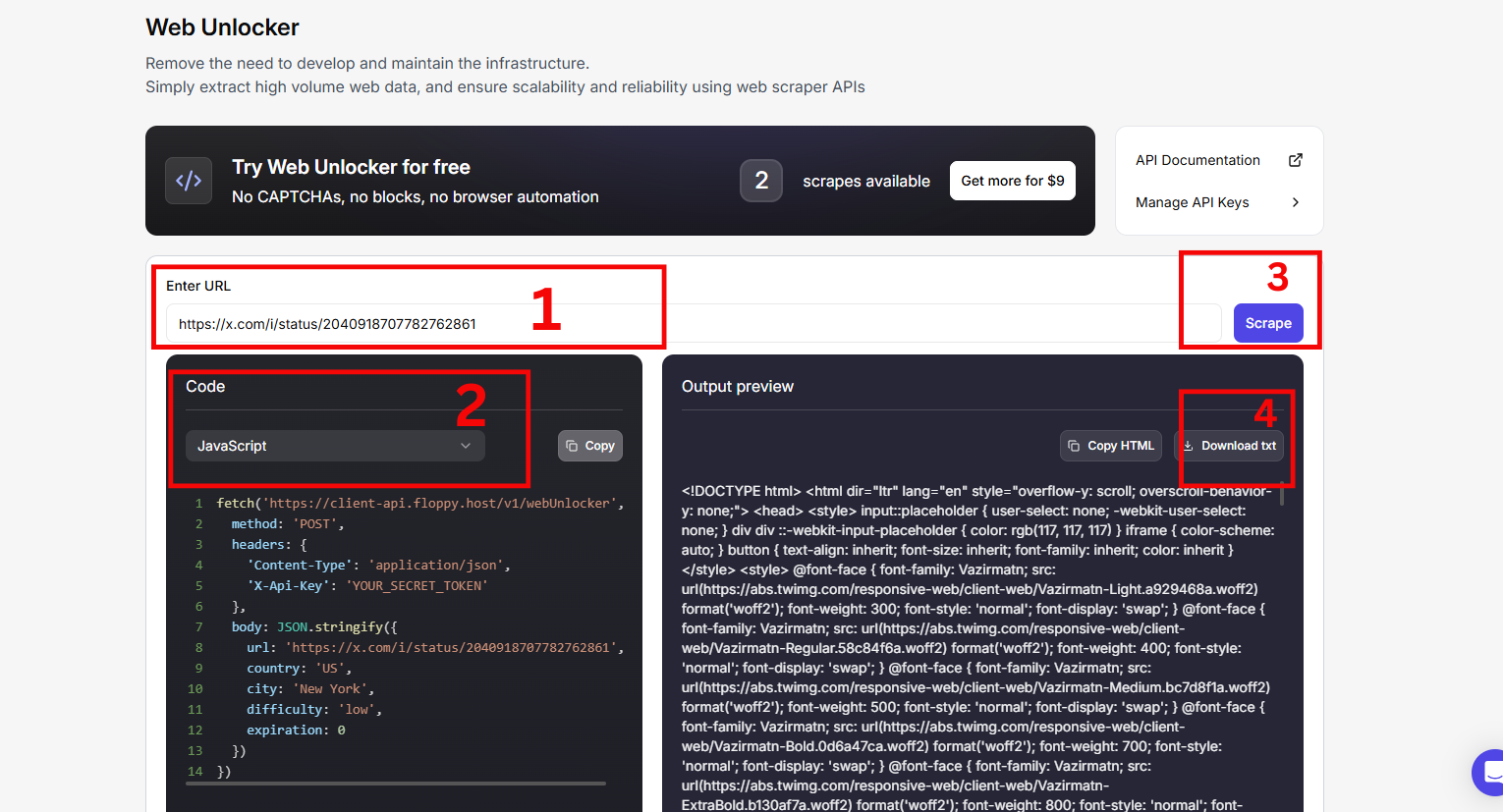
And you have successfully extracted data from the social media platform with zero stress.
Conclusion
Scraping social media has become a reliable way for individuals and brands to collect relevant data. Extracting data from various sources provides useful insights on customer sentiments without the need for carrying out surveys.
This guide has explored the different options on how to scrape social media data – use of programming languages, APIs, and no-code scraping solutions. Floppydata stands out as a one-stop scraping solution that allows even those with no coding skills to harvest data with ease.
Do you want to scale your social media scraping activities? Get Floppydata’s Web Unblocker for an exciting experience.