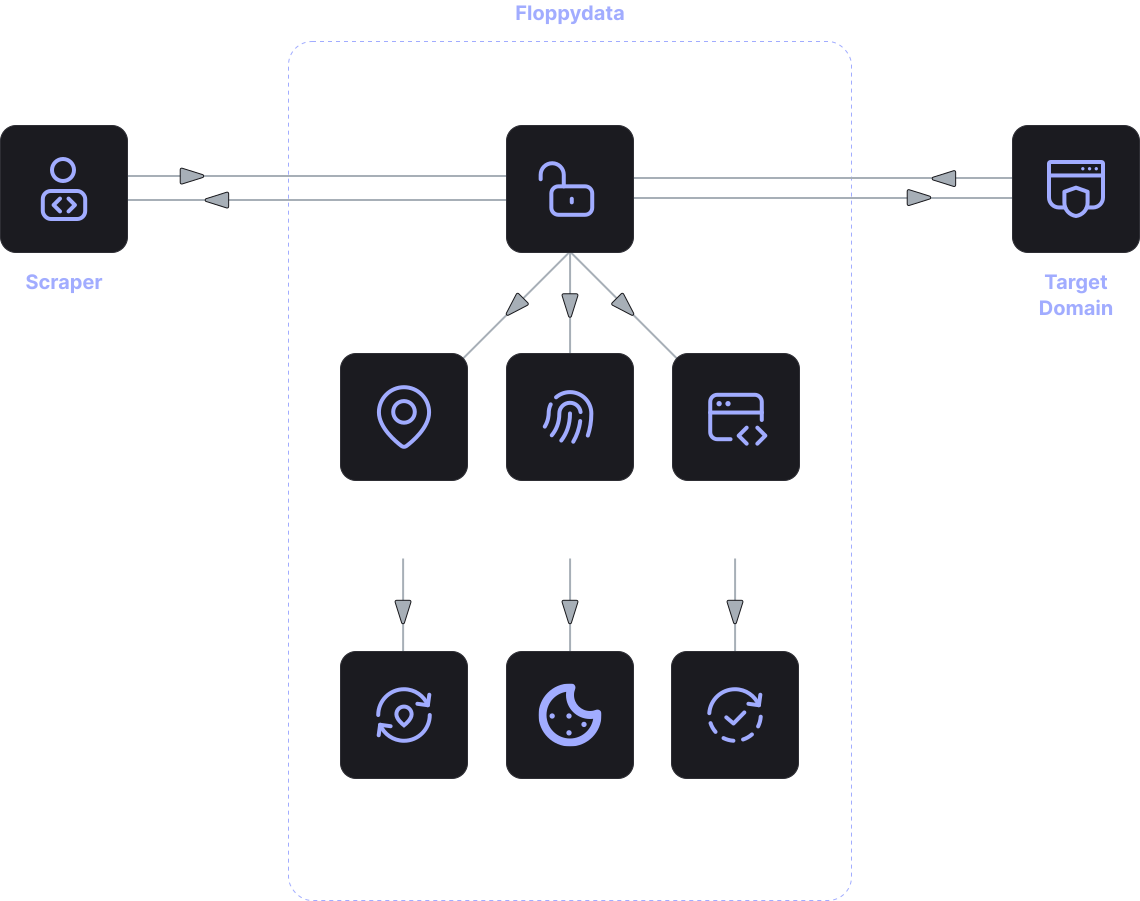
The SERP Scraper API automates the extraction of data from search engines. Companies use ready-made SERP APIs, which return search results in pre-structured data. This is easier than running a search engine query or setting up a complex search engine result position checking system.
When a business works with SEO, advertising, or analytics, it is important to see the real picture of the output: site positions, snippets, ad blocks, maps, featured snippets, and other elements. A regular parser does not always cope with such tasks, especially if the search engine actively protects itself from automatic queries.
That is why the specialized serp scraper api is used, which takes into account the features of search engines and allows you to get stable data without blocking.
How does the SERP API work?
SERP scraper is based on a simple principle: you send a request with a keyword and parameters, and the system returns the output result in a structured form.
The request can take into account:
- Region and language
- Device type
- Search parameters
- The depth of output
Thanks to this, the serp analysis API allows you to analyze the output exactly as the user sees it in a particular country or city. This is especially important for local SEO and international projects.
Instead of manually verifying the results or using unstable solutions, companies integrate the SERP Scraper API directly into their analytical systems. The data is automatically transferred to reports, dashboards, or internal tools.
What is SERP scraping used for?
SERP scraping is necessary in tasks where the dynamics of search results are important. This is not just a position check, but a full-fledged analysis of the competitive environment.
In practice, the SERP API is used for:
- Tracking website positions by keywords
- Competitor analysis in search results
- Monitoring of ad blocks
- Identification of changes in the issuance structure
- Collecting data for SEO reporting
The best Serp API is especially in demand in projects with many keywords. When there are thousands of requests, manual verification becomes impossible, and automation via the API becomes the only rational solution.
Why is the stability of the SERP scraper API important?
Search engines actively restrict automatic queries. Simple scripts are often blocked, produce incomplete data, or require constant refinement.
The professional serp scraper API takes into account:
- Working with a proxy
- Distribution of requests
- Correct processing of regions
- Resistance to limitations
This allows the tool to be used not sporadically, but as a full-fledged component of the analytical infrastructure. For SEO agencies, marketing teams, and SaaS platforms, such an API becomes the basic data source.
Working with search results requires accurate and up-to-date data. SERP results are constantly changing: site positions are shifting, new ad blocks are appearing, and the page structure is changing. Without an automated tool, it is difficult to track such changes in dynamics. That is why the SERP API is used as a source of system data, and not as a one-time solution. It allows you to get the same structured information for hundreds and thousands of queries, without relying on manual checks.
How to choose the best SERP API
When choosing the best Serp API, it is important to understand the scope of the tasks. For small projects, the basic functionality is suitable. Large companies will require high bandwidth and flexible settings.
It is worth paying attention to:
- Data accuracy
- Support for different search engines
- Geolocation settings
- Response rate
- The ability to scale
Aside from the basic features, the best SERP API will focus on predictive analytics. Predictive analytics is the use of past data and trends to anticipate future patterns. Regularly scraping search results data allows businesses to be able to predict seasonality, assess the competition, and evaluate the effectiveness of the current SEO strategy. SERP scraping is a valuable analytics resource, not simply a data collection tool.