Yelp scraper is a tool for automated collection of public information from the Yelp platform. Instead of manually browsing company pages and copying reviews, Yelp web scraper is used, which extracts data and saves it in a structured form.
Yelp scraping is understood as working with open data: business cards, ratings, reviews, number of ratings, categories, and other public information. This Yelp data scraper helps analyze local markets, customer behavior, and the reputation of companies.
Yelp is an important source of reviews in the fields of restaurants, services, medicine, real estate, and local businesses. Therefore, Yelp scraping is becoming part of the analytical work for many companies.
How does Yelp web scraping work?
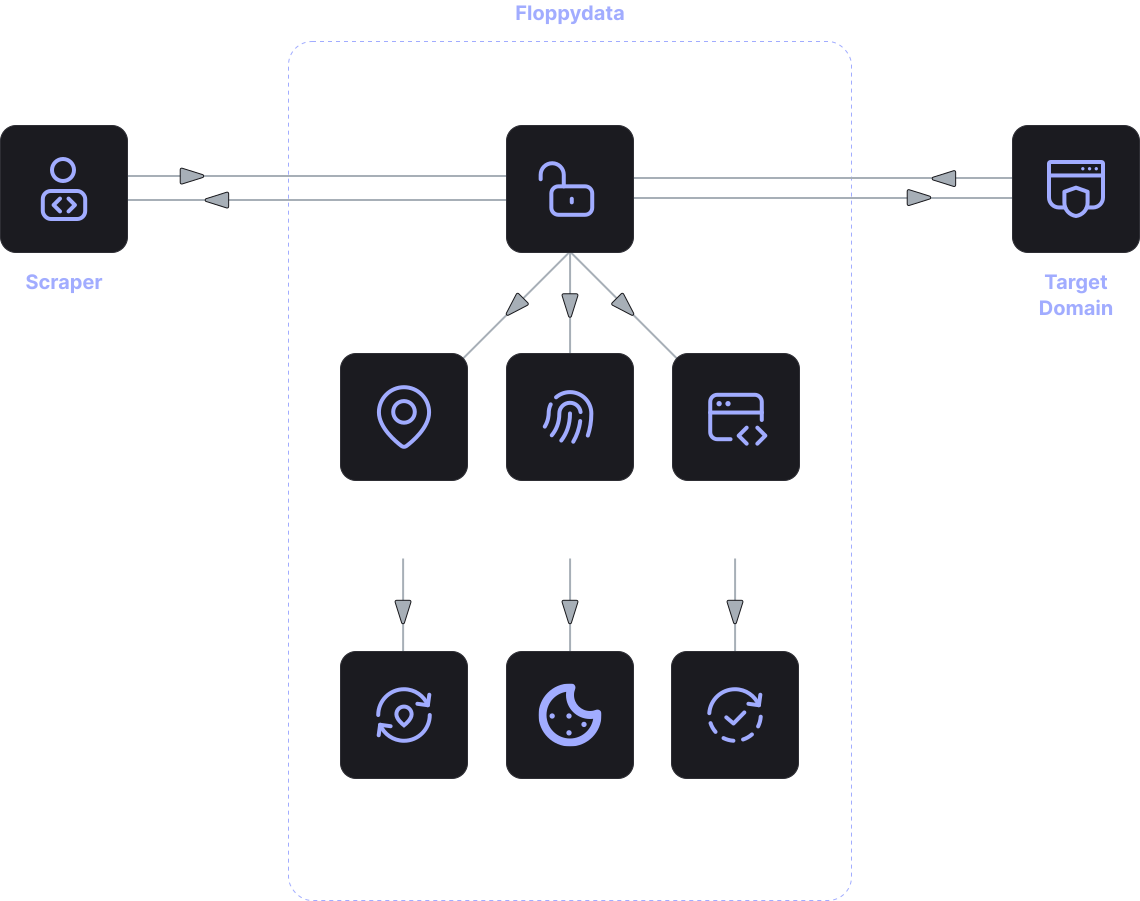
When yelp web scraping is applied, the system sends a request to the company’s public page or to search results by category and city. Next, scrape yelp data allows you to extract specific fields: rating, number of ratings, text of reviews, publication dates, company information.
If the task involves analyzing customer opinions, scraping Yelp reviews is used. This approach allows you to collect the texts of reviews, publication dates, and ratings, after which the data can be used to analyze the tone, frequency of complaints, and strengths of the business.
A typical process looks like this:
- The list of pages or search queries is determined
- The system receives public data
- The information is structured and stored
- The data is used in analytics or reports
Due to this, manual collection is replaced by a system process.
What is Yelp scraper used for?
Yelp scraping is used in tasks related to local marketing and competitive analysis.
Yelp scraper is most often used for:
- monitoring ratings and reviews
- analyzing competitors in a particular city or niche
- assessment of reputation dynamics
- market research before starting a business
- collecting data for analytical reports
For example, if a company operates in the field of catering, Yelp scraping helps to understand which competitors receive more positive reviews and due to which factors.
Research teams, for example, use Yelp web scraper to study reviews and examine patterns in consumer behavior.
Advantages of using Yelp Scraper
The most notable benefit is time savings. Yelp scraper eliminates the need for manual data entry, and solves the hours-long task of going through numerous pages.
The second important factor is scale. If you need to analyze dozens of cities or categories, manual collection becomes almost impossible. Yelp data scraper does this systematically.
The third advantage is its structure.
The structural advantage is that data is readily available in a format that allows for easy uploading to databases or analytical tools, thereby enhancing the available options for analytics and reporting.
In addition, regular Yelp scraping enables you to identify trends such as increasing ratings, the influx of new reviews, and the evolution of rankings in the results lists.
Who is suitable for Yelp Scraping
Yelp scraper is in demand among marketers and local business owners who analyze competitors and reputations.
SEO specialists use Yelp web scraping to study local search results and ratings. Analysts use scraping Yelp reviews to identify patterns and analyze customer experiences.
The tool is also suitable for research companies and digital agencies working with small and medium-sized business segments.
If the task involves regular review of reviews and ratings, scraping Yelp data becomes a convenient solution.
Important aspects of use
Each platform has its own terms of service and rules to be followed when engaging in web scraping Yelp, to ensure compliance. In this case, you need to be familiar with the limitations of the service and scrape only the data that is publicly accessible.
Setting up requests correctly and using a moderate collection frequency helps reduce the risks of restrictions. The stability of the process depends not only on the tool, but also on the architecture of the work.