The Google Search Scraper API is used to automatically retrieve Google search results in a structured format. Instead of manually checking positions or unstable scripts, companies connect the google scraping api, which returns data directly through the API interface.
Google search results have long ceased to be a list of ten links. It has advertising blocks, maps, news blocks, local companies, and extended snippets. To correctly extract such a structure, a specialized google search results scraper is required, capable of working with the real version of the page, rather than with a simplified copy.
This approach is especially relevant for SEO analytics, competitor monitoring, and automated reports.
How the Google scraper API works
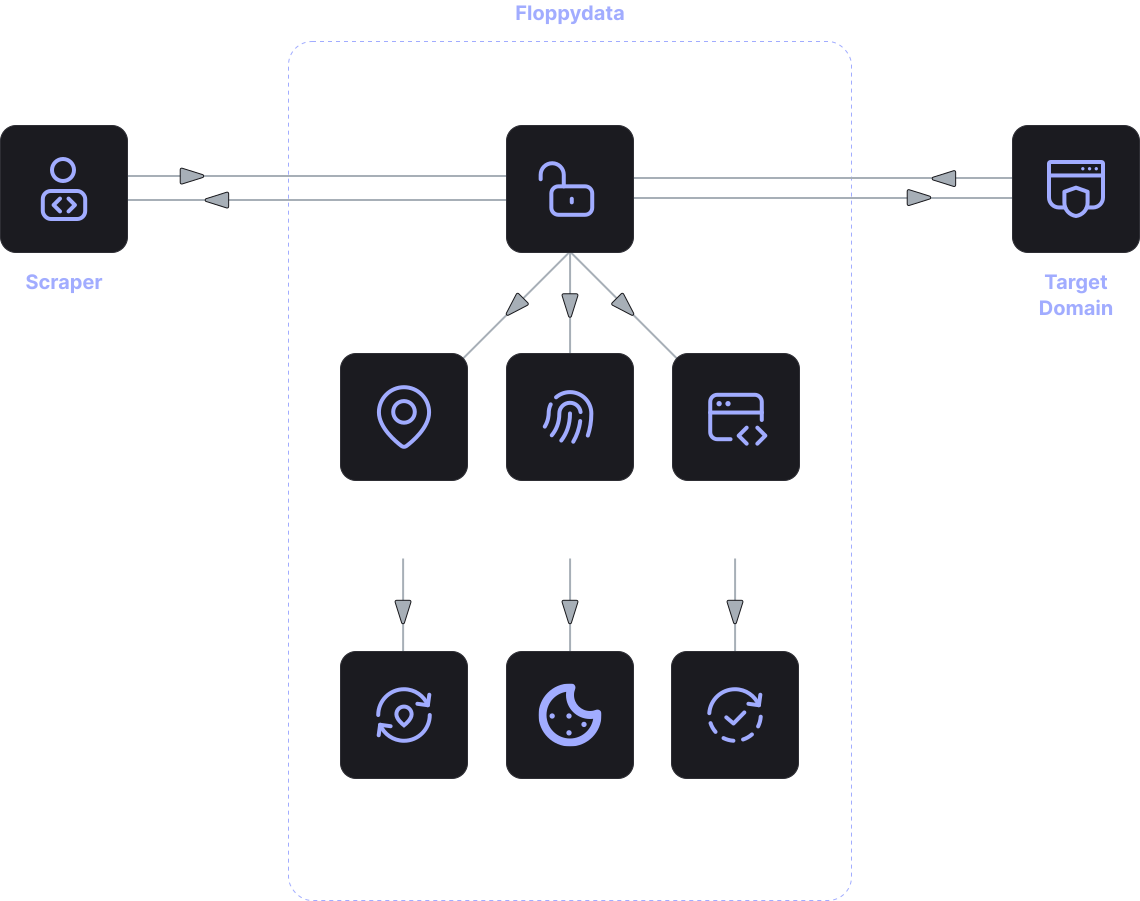
Using Google scraper API works as follows: the request gets sent to the API service first, then it goes to the search engine. The service then returns structured data such as: links, rank positions, title, answers, and other output elements.
With this method, you can not only scrape Google results, but also formulate a strategy with the refined and most current data.
Depending on the task, you can:
- scrap Google results by keyword
- receive data via the google search keywords api
- analyze the output by region
- extract news via google news scraper
- work with maps via google maps scraper api
If a simple check is required, use google scraper online or the basic google search scraper tool. For integration into corporate systems, a full-fledged Google web scraping api is used, which can be integrated into the analytical infrastructure.
What tasks are Google scraping API used for?
The Google scraping API is used in projects that require regular and accurate access to search results. First of all, we are talking about SEO analytics. Companies track keyword positions, analyze the SERP structure, evaluate competitors, and study changes in search results after algorithm updates.
In addition, the Google search scraper api is used to monitor ad blocks and analyze search ads. This helps you understand how competitors allocate their budget and which formats they use. The tool is also in demand when collecting news through google news scraper and when analyzing local search results using the Google maps scraper api, where accurate geolocation is important.
In large-scale projects, the google web scraping api becomes part of an analytical system that automatically collects data, updates reports, and helps make decisions based on the real picture of search demand.
Why is it important to use a specialized google result scraper?
The Google search engine actively protects its search results from automatic queries. Simple scripts block quickly, return incomplete data, or run erratically. That is why a specialized google result scraper is used for serious tasks, which takes into account the limitations and processes the output correctly.
The professional google scraper api allows you to get structured data without manual intervention. It works correctly with regions, device types, and additional page elements, including maps and news blocks.This is especially necessary when data is to be used repeatedly and is to be compared over a given period.
Using an advanced tool, the operation becomes reliable. Instead of unstable parsing, you obtain a customizable control, which can be incorporated into reporting and analytics and marketing systems without having to edit the code.
Working with Google search results requires accuracy and a systematic approach. The algorithms are updated regularly, the page structure is changing, and the competition in search is becoming more dynamic. This is why companies are moving from one-time checks to automated data collection via the API. This approach allows you not just to scrap Google results, but to build a strategy based on accurate and up-to-date data.