Introduction
Many users recognise Storm Proxies as an OG proxy provider that sells several kinds of rotating proxies. It thrives in low-stakes situations like small scraping tasks or even some lightweight sneaker drops. It is simple, fast(ish), and affordable.
This is great until you need more. The moment you push it, the cracks start to show because Storm Proxies offers very few advanced features. Its network is small and quite exposed to bans and captchas, and its performance is just average at best.
The lack of mobile proxies, ISP proxies, and fine-grained geo-targeting are only some of the biggest gaps. By this point, most users have already started looking elsewhere, and if this sounds like you, then you have come to the right place.
In this article, we have identified 10 of the best Storm Proxies alternatives to consider in 2026, and by the end, you will be able to choose the proxy service that best suits your needs.
TLDR
If you’re in a hurry, here’s a quick rundown of the top Storm Proxies alternatives in 2026:
| Provider | IP Pool Size | Locations | Free Trial | Proxy Types | Targeting Options | Starting Price (Residential) | Best For |
| Floppydata | 65 million | 195 countries | No | Residential, Mobile, Datacenter, ISP | Country, state, city, ASN | $1/GB | Best overall |
| Proxy-Seller | 40 million | 220+ locations | No | Residential, ISP, Mobile, Datacenter (IPv4/IPv6) | Country, state/city (varies) | $3.50/GB | Flexible plans and wide coverage |
| MarsProxies | 1 million | 190+ countries | No | Residential, ISP, Mobile, Datacenter, Sneaker | Country, state, city | $4.99/GB | Budget users needing more proxy types |
| MangoProxy | 90 million | 220+ countries | No | Residential (main), ISP, Datacenter | Country, state, city, ASN | $2/GB | Large-scale residential scraping |
| Shifter | 50 million | 150+ countries | No | Residential (Static & Rotating), Sneaker ISP | Country-level | $99/month | Bundled scraping APIs |
| ProxyJet | 75 million | 180 countries | No | Residential, Mobile, Datacenter, ISP | Country + city/state (limited) | $3.25/GB | Flexible usage with 1 year traffic validity |
| Coronium | undisclosed | 30+ locations | Yes | Mobile (4G/5G/LTE) | Country (per device) | $69/month (UK) | High-trust mobile proxy use cases |
| NetNut | 85 million | 195 countries | Yes (7-day) | Residential, Mobile, Datacenter | Country + advanced (plan-based) | $100+/month | Enterprise scraping performance |
| Free-Proxy-List.net | Thousands (public) | Varies | Free (public list) | Free HTTP proxies | Country + anonymity | Free | Testing only |
| ProxyScrape | 55 million | Global | Free list available | Free lists + Premium Residential/DC | Basic targeting | Varies | Free lists + budget premium proxies |
Brief review of Storm Proxies
Before we get into the list, here’s a quick overview of Storm Proxies and why many users are switching to more capable alternatives.
What is Storm Proxies?
Storm Proxies has existed since 2016 and has grown into a familiar name for rotating residential proxies used by individuals and small businesses. It currently runs a modest network of about 20 million IPs.
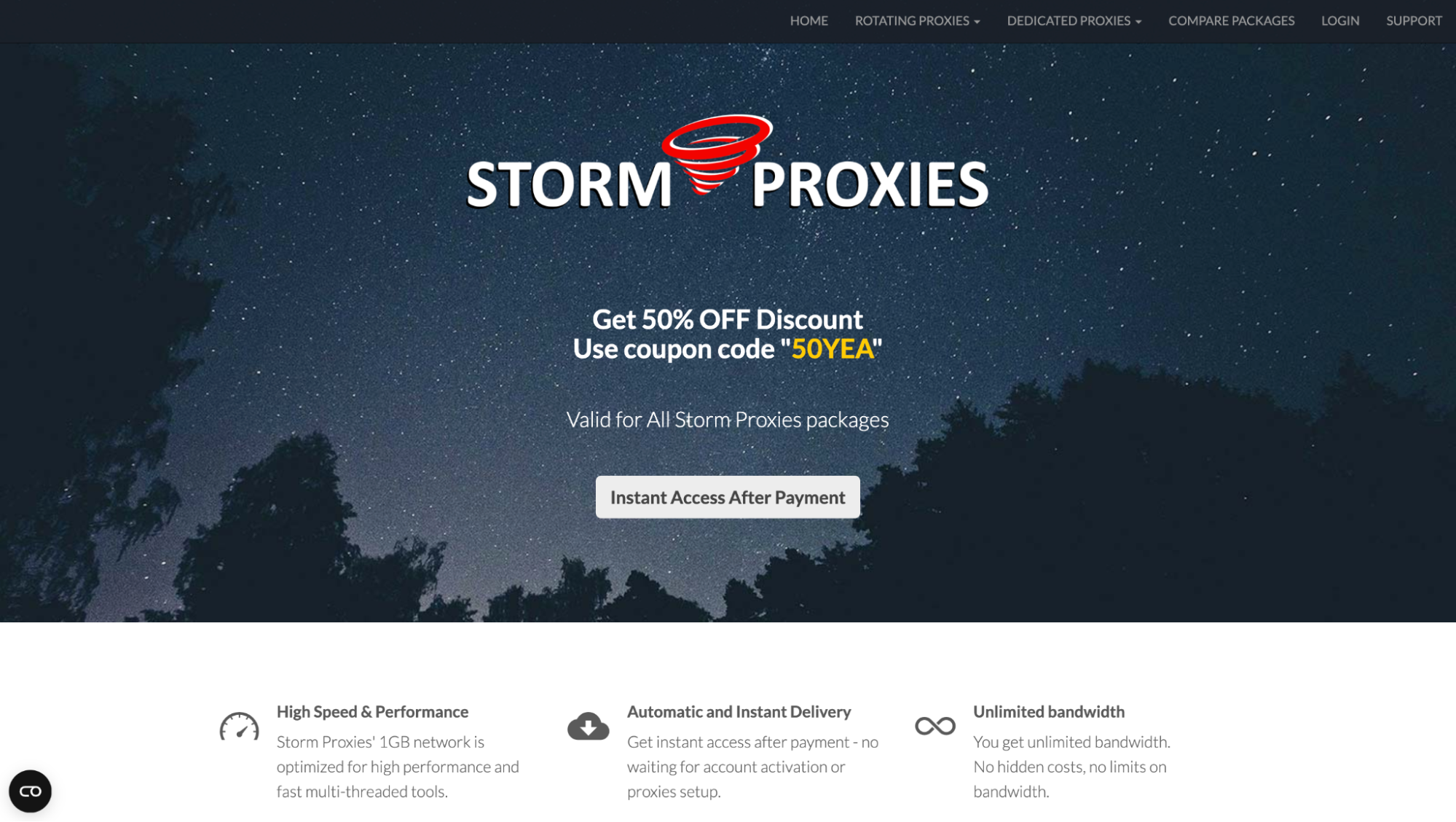
Storm Proxies doesn’t exactly disclose the geo distribution of its IPs, but reliable sources suggest the majority are concentrated in the United States and parts of Europe. Now, this is far less diverse than most alternatives on this list that cover a larger number of countries.
That said, where it lacks in IP spread, it does make up for it with affordability. Its biggest selling point is the unlimited data usage included in all residential proxy plans. However, this same lack of traffic limits often leads to heavy abuse across the network, which then results in mediocre performance and lower success rates on stricter platforms.
Storm Proxies keeps things simple by focusing purely on proxy IPs. It lacks complementary features you’ll find among stronger competitors, such as scraping APIs or automation tools. The service also does not offer mobile or ISP proxies, and its targeting options are fairly basic.
Storm Proxies does not offer a free trial, so if you want to try it, you must do so within 24 hours as part of the company’s money-back guarantee. But it only applies to the smallest plan in each category. Larger plans are non-refundable, so you don’t want to commit to a plan in a hurry.
Notable Features
Storm Proxies’ rotating proxies include several advanced features:
- Multiple Rotation Intervals: Choose between fresh IPs with every HTTP request, 3-minute proxies, or 15-minute proxies, providing flexibility based on your needs.
- Unlimited Bandwidth: No hidden costs or bandwidth limits, allowing unlimited data usage.
- Global Proxy Locations: Access to proxies from the US and EU, with combined options available.
- High Anonymity: Private dedicated IP addresses are used for maximum privacy.
Other notable features include:
- Easy Integration: Simple integration into any software via the provided proxy gateway IPs.
- Instant Setup: Immediate access to proxies upon purchase.
- Premium Support: Available to assist with any needs or custom requirements.
Pricing:
Storm Proxies provides access to three IP categories: residential rotating proxies, private dedicated addresses, and backconnect rotating proxies, each with its own distinct pricing options:
- Rotating Reverse Proxies: from $39 per month
- Residential IPs: from $50 per month
- Dedicated Private Proxies: from $10 per month
- Ticketmaster & Tickets Sites Proxy: From $160 per month
Pros vs Cons
| Pros | Cons |
| Unlimited bandwidth | Limited locations, mostly US |
| Easy and fast setup | No free trial |
| Low entry cost | Smaller IP pool (20 million) |
| 24-hour money-back guarantee (small plans) | No mobile proxies |
| 3-Minute and 15 Minute Proxy plans | Email-only support |
| Limited advanced features | |
| No SOCKS5 Support |
Why look for a Storm Proxies alternative?
All in all, Storm Proxies is a decent starting point for hobbyists and small-scale tasks, but it has many limitations that are considered the bare minimum in the market right now, such as:
- Limited targeting options with only country level geo targeting
- Lack of transparency around IP sourcing and reputation
- Inconsistent performance across different targets and time periods
- Fluctuating customer support with reports of slow responses, unresolved tickets, and little to no follow-up on complex issues.
Identifying these gaps helped us understand exactly what to look for in a provider that can properly replace Storm Proxies, and that’s how we built the list below.
Top 10 Storm Proxies Alternatives
Now, let’s explore the top 10 Storm Proxies alternatives in 2026 and what each one brings to the table.
1. Floppydata
Floppydata is the top recommendation for anyone looking for a viable Storm Proxies alternative in 2026. It offers all the major proxy types, including mobile and ISP proxies, which are notably missing from Storm Proxies. It also has a much larger residential pool with over 65 million IPs and supports SOCKS5, unlike Storm Proxies.
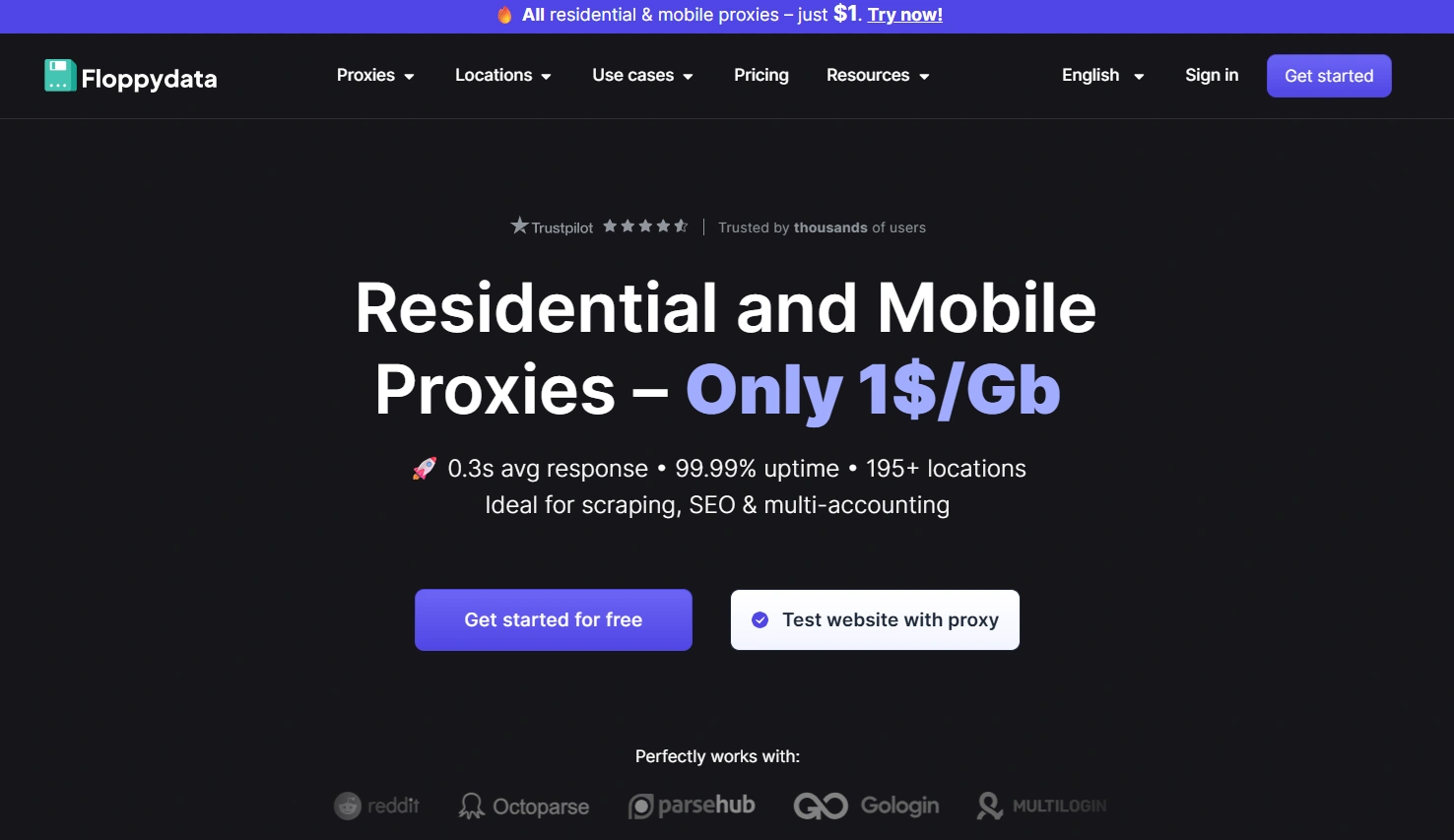
Another big advantage is the pricing structure. While Storm Proxies uses an older port-based model, Floppydata uses a clear per-GB and per-IP pricing system. This makes it easier to scale and far more flexible.
In fact, Floppydata has some of the lowest rates in the industry.
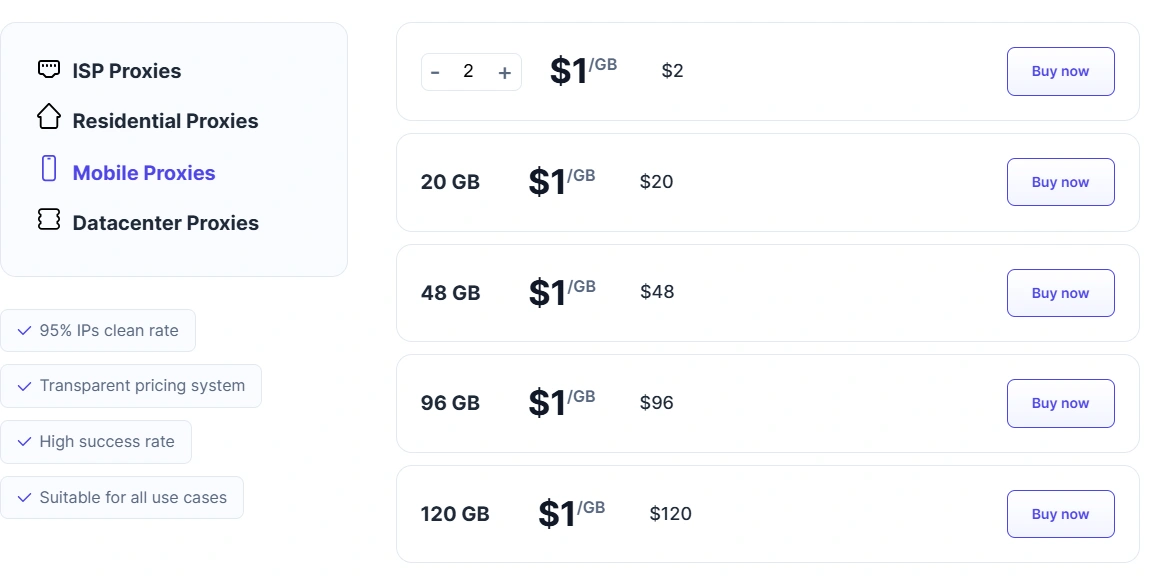
For example, $10 gets you 10GB of residential traffic, which can easily outperform Storm Proxies’ $19 for one port. Plus, unused traffic doesn’t expire, so you’re never forced to “use it up” before the month ends.
Floppydata already covers everything Storm Proxies can do, but it goes further with extra tools that make everyday proxy use easier. Users get an intuitive dashboard, real-time usage stats, and API integration with tools like Gologin and AdsPower.
If you want a stronger option for scraping, Floppydata gives you extra leverage with its Web Unlocker tool. It’s built to help you access tougher websites without spending hours tweaking headers, cookies, or retries. All you need to do is pass a URL, and it returns the cleaned HTML, so you do not have to build and maintain your own scrapers.
Key features
| Features | Details |
| Total Available IPs | 65+ million |
| Proxy Types | Residential, Mobile, Datacenter, ISP |
| Geographic Distribution | 195 countries |
| IP Targeting Features | Country, state, city |
| ASN/Coordinates Targeting | Available |
| Rotation Flexibility | Automatic & Sticky |
| Unlimited bandwidth | Yes |
| Average response times | 0.3s |
| Success Rate | 99.99% |
| Supported Protocols | HTTP, HTTPS, and SOCKS5 |
| Customer Support | Available (Live chat, Email, Telegram) |
| Free Trial | No free trial, but low-cost entry |
Unique Floppydata tools that stand out
Floppydata also ships a set of free tools that help you plan and test before you spend any traffic:
- Test website with proxy: There’s a built-in checker on the main page that lets you test any URL with Floppydata proxies. In the response you will see the HTTP status, IP address, city-level location, ASN, and a live fraud score before you commit to anything.
- IP Rotation Detector: This diagnostic tool shows you how stable your proxies are and how often the IPs actually change, so you can tune rotation settings for your scraper or bot.
- Proxy Type Selector: This simple helper asks a few questions and suggests the best proxy type and setup for your task, whether it is scraping, social media, or something else.
- Free proxy list: Floppydata also offers a regularly updated free proxy server list with many fresh IPs you can use for light tasks, testing, or basic privacy. No sign-up is needed to try it.
Most competitors either hide these tools behind a paywall or do not provide them at all. Floppydata makes them free so you can validate performance, understand your footprint, and make smarter spending decisions before buying traffic.
Pricing
- Residential proxy: Starts at $1/GB
- Mobile proxy: Starts at $1/GB
- Datacenter proxy: Starts at $0.6/GB
- ISP Proxies: Starts at $5/IP
Pros Vs. Cons
| Pros | Cons |
| Easy to set up and manage proxies | No free trial |
| Country, city, and ASN targeting | Newer compared to Storm proxies |
| Simple flat pricing with no hidden fees | |
| Non-expiring traffic | |
| Free public proxy list | |
| Fast response times (0.3s) | |
| Strong customer support |
Our verdict
If you want the best all-round Storm Proxies alternative in 2026, Floppydata is the safest pick. It’s cheaper, more flexible, and offers far more proxy types and targeting options.
2. Proxy Seller
Proxy-Seller is another strong alternative to Storm Proxies, especially if you want flexible purchase options and a wide choice of locations. You can buy either bandwidth or individual IPs, which makes it easy to match your budget and use case.
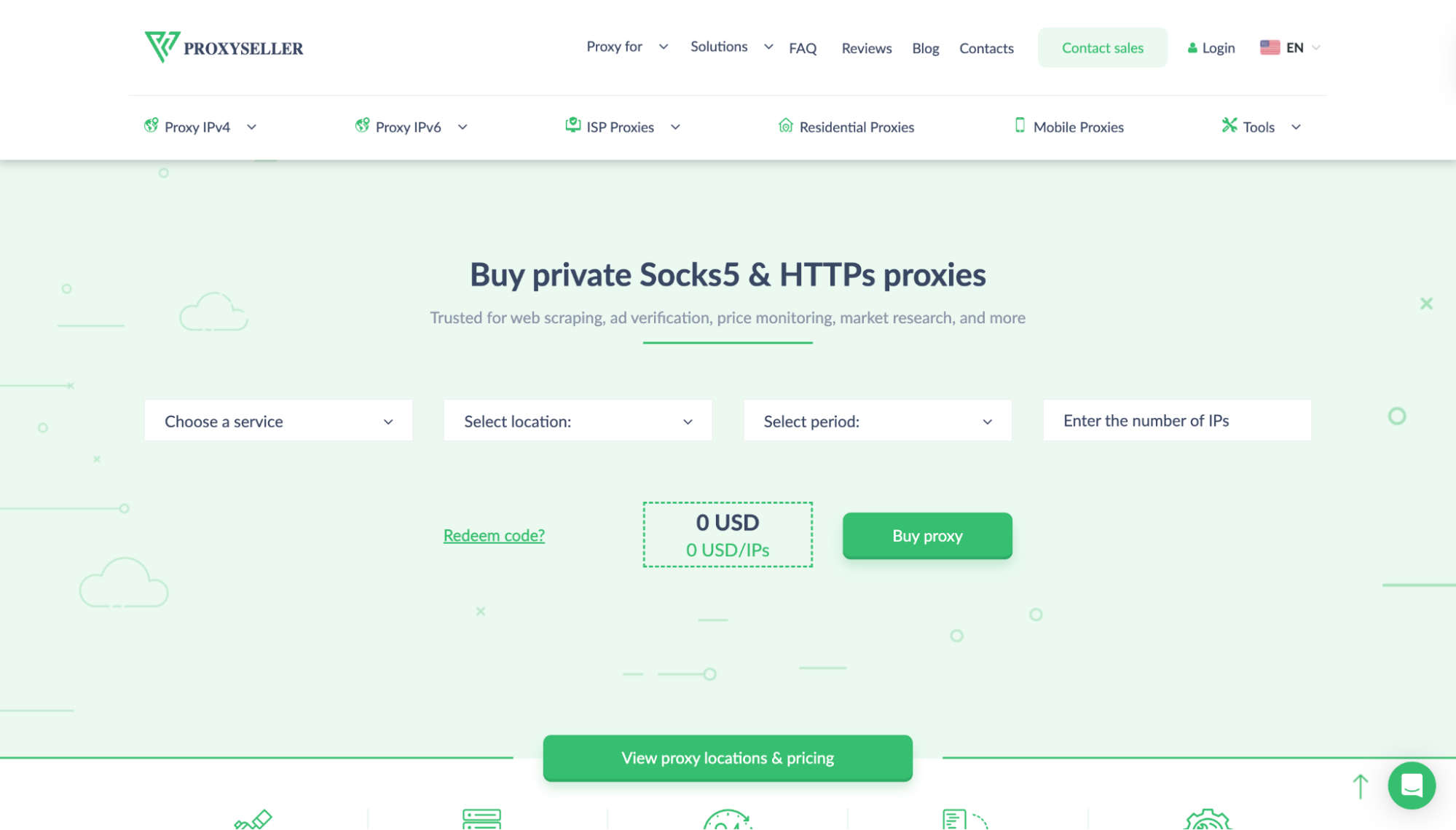
Proxy-Seller is a well-established provider with over 9 years in business and a pool of 40M+ IPs across 220+ locations worldwide. It offers almost every major proxy type, including dedicated datacenter IPv4/IPv6, ISP (static residential), rotating residential, and 4G/5G mobile proxies.
One big advantage over Storm Proxies is its more granular targeting. You can select specific countries and, in many cases, even states or cities, thanks to its large network. If Storm’s limited geo-targeting is a problem, Proxy-Seller fixes that.
Another strong point is how easy it is to start. Proxy-Seller allows very small purchases (even 1 proxy or 1GB) and flexible durations, from weekly plans all the way to yearly subscriptions. That makes it a good fit for users on a tight budget or those who want to test before scaling.
Feature Breakdown
| Feature | Details |
| Total Available IPs | 40+ million IPs |
| Locations | Over 220 global locations |
| IP Targeting Features | Country, city-level targeting |
| IP Rotation | Static and configurable rotating IP options |
| Supported Protocols | HTTP, HTTPS, SOCKS5 |
| Bandwidth | Unmetered (By IP) |
| Free Trial | No (3-day trial for $1.99) |
| Authentication | Username/Password or IP Whitelist |
| Support | 24/7/365 technical support (live chat and tickets) |
| Other tools | Proxy checker, DIY mobile proxies |
Pricing
- IPv4 Proxies: From $0.7 per IP (or $1.13 for popular locations)
- Residential Proxies: $3.50 per GB
- ISP Proxies: From $1.50 per IP
- Mobile Proxies: From $33 per IP (Pay-as-you-go)
Pros & Cons
| PROS | CONS |
| Large IP pool | No free trial |
| Great customer support | Expensive residential proxies |
| Affordable pricing options | Limited Regions for Mobile Proxies |
| High connection speed (up to 1 Gbps) | Limited rotating options |
| User-Friendly and reliable | Slightly Dated Interface |
Our verdict
Proxy-Seller is an excellent alternative if you want cheap yet versatile proxies with flexible plans. However, if you need lots of residential traffic at the lowest possible price, you may find its residential rates higher than some other Storm Proxies competitors on this list.
3. MarsProxies
Just like Storm Proxies, MarsProxies also markets itself as a budget-friendly proxy provider. Despite a smaller IP pool, MarsProxies offers more proxy types, including mobile and ISP proxies, which instantly makes it more flexible.
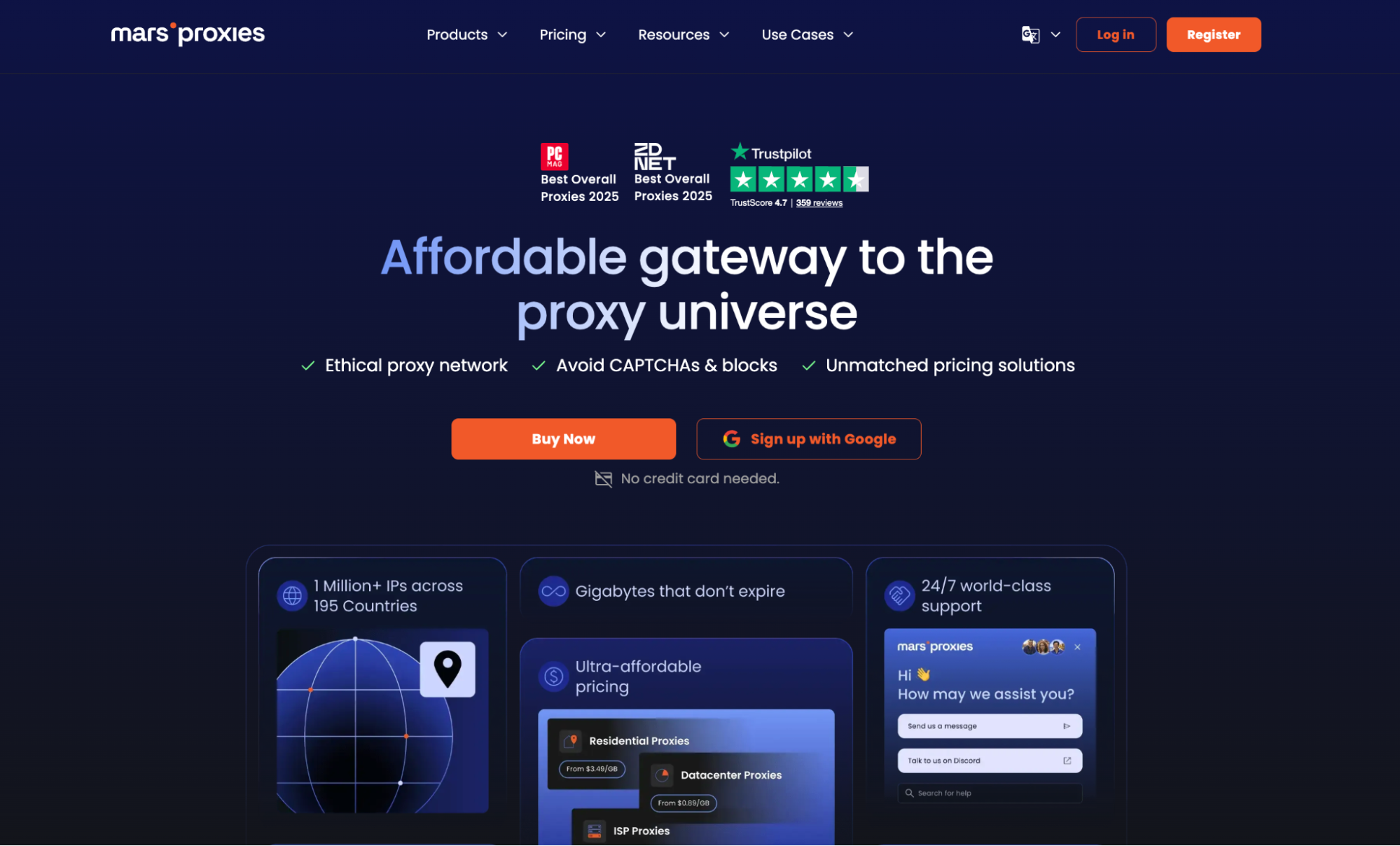
MarsProxies provides residential, ISP, mobile, datacenter, and even IPv6 proxies at very competitive rates. It also fancies itself a more modern option for sneaker proxies compared to Storm Proxies.
One of MarsProxies’ standout strengths is its flexible pricing. You can choose between pay-as-you-go traffic packages, daily subscriptions, and monthly plans. The provider supports targeting at the country, state, and city levels, and it even allows selecting a specific mobile carrier or ISP for mobile proxies.
MarsProxies doesn’t offer a free trial, but you can purchase as little as 1GB of residential traffic or even one-day proxy plans to test cheaply. You can also buy as much bandwidth as you need (starting from 1GB), and it will never expire if unused.
Key features
| Feature | Details |
| Total Available IPs | 1M+ rotating and static residential IPs |
| Proxy Types | Residential, ISP, Datacenter, Mobile, Sneaker |
| Geographic Distribution | 190+ countries |
| IP Targeting Features | Country, state, city |
| Unlimited bandwidth | Available on enterprise plans |
| Rotation Flexibility | Automatic or sticky rotation |
| Fraud scores | Low – medium |
| ASN/Coordinates Targeting | Not supported |
| Supported Protocols | HTTP, HTTPS, and SOCKS5 |
| Customer Support | 24/7 live chat + Discord |
| Free Trial | No free trial |
Pricing
- Residential Proxies: Starting at $4.99 per GB
- ISP Proxies: Starting at $1.35 per proxy
- Datacenter Proxies: Starting at $0.89 per proxy
- Datacenter IPv6 Proxies: Starting at $0.22 per proxy
- Sneaker Proxies: Starting at $0.86 per proxy
- Mobile Proxies: Starting at $2.83 per day
Pros Vs. Cons
| Pros | Cons |
| Affordable pricing | Small IP pool |
| Non-expiring residential traffic | No free trial |
| Wide product range | ASN or ZIP targeting is unavailable |
| City level targeting | Limited reporting and analytics tools |
| Easy setup and user-friendly dashboard |
Our verdict
MarsProxies is a compelling alternative for Storm Proxies users who are cost-conscious but want more proxy types and better features without paying premium prices.
4. Mango Proxy
MangoProxy is a newer, budget-friendly proxy provider that is quickly gaining traction for its high-quality residential proxies and developer-friendly features.
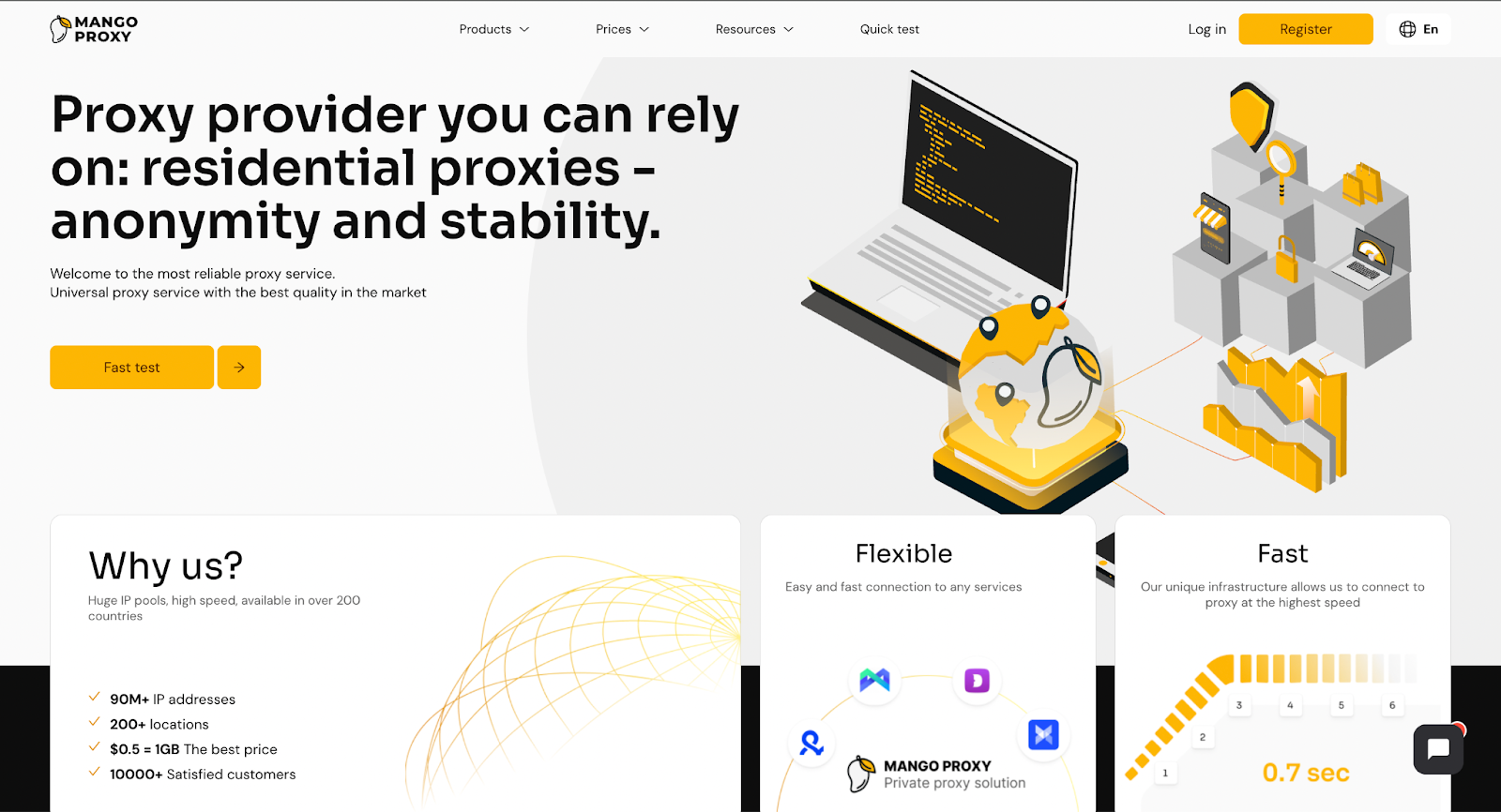
Off the bat, MangoProxy ticks a lot of boxes. It has a huge pool of 90M+ IP addresses across 220+ countries, which is a strong statement for a relatively new provider.
It also claims to support over 450 tools, including anti-detect browsers, trackers, parsers, and automation systems. MangoProxy goes a step further by offering an API scraper tool and integrations for data collection projects.
It’s designed to work well with anti-detect browsers and automation software, supporting unlimited accounts and sessions without constant bans.
Key Features
| Feature | Details |
| IP Pool Size | 90M+ IP addresses |
| Proxy Specialization | Residential proxies |
| Global Coverage | 220+ countries |
| ASN Support | Available |
| Supported Protocols | HTTP, HTTPS, SOCKS5 |
| Customer Support | 24/7 support |
| API Access | Available |
| IP Rotation Frequency | Every 10 requests |
| Payment Methods | Credit Cards, PayPal, Cryptocurrencies |
| Free trial | No |
Pricing
- Residential proxies: from $2/GB
- Dynamic ISP proxies: from $0.8/GB
- Datacenter proxies: from $0.6/GB
- Static ISP proxies: from $2.1/IP
- Static datacenter proxies: from $2.1/IP
Pros & Cons
| PROS | CONS |
| Large IP pool | No free trial |
| Rotating and sticky sessions | High starter prices |
| Available in 200+ countries | Limited proxy options |
| Immediate proxy delivery | Inconsistent performance |
| Unlimited concurrent sessions | Unclear IP sourcing methods |
Our verdict
Mango proxy is a great pick if your workload requires many residential proxies. However, its entry prices are quite high, so solo devs and small businesses may consider other options.
5. Shifter
Shifter is not really a newcomer to proxies. Just like Storm Proxies, Shifter sells proxies by port with unmetered usage, but it operates on a much larger scale.
Shifter started out focused solely on proxies but has since evolved into a broader data collection platform. Its services now include:
- Residential Proxies (Rotating and Static)
- Sneaker ISP Proxies
- Scraping API and SERP API
- Cloud Hosting
Shifter provides access to a network of 31+ million rotating residential IPs and also offers datacenter proxy options. It also includes “Special Rotating Proxies”, which are simply high success residential ports designed for tougher targets.
That said, Shifter has fallen behind some premium alternatives when it comes to targeting features. There’s no option to select specific cities or ASNs, no username and password authentication, and no true per-request rotation.
For testing, the provider offers a 3-day money-back guarantee on proxy plans. So, you can try it out and request a refund if it doesn’t meet expectations.
Key features
| Feature | Details |
| Total Available IPs | 50 million IPs |
| Proxy Types | Residential (Static and Rotating), Sneaker, ISP |
| Geographic Distribution | 150+ countries |
| ASN/Coordinates Targeting | Not available |
| IP Rotation | Available |
| Unlimited Bandwidth | Available (select plans) |
| Supported Protocols | HTTP, HTTPS, SOCKS5 (premium plans only) |
| Free Trial | No |
| 24/7 Support | Yes, via email |
Pricing
- Rotating residential Proxies: from $0.3/GB ($99/month)
- Static residential Proxies: from $74.99 per 25 IPs
- Sneaker Residential Proxies: from $74.99 per 25 IPs
Pros & Cons
| Pros | Cons |
| Large IP pool | No free trial |
| 24/7 support | High starter plans ( $100) |
| Competitive cost per GB | Limited targeting |
| 3-day money-back guarantee | Limited session control options |
| Unlimited Bandwidth (on supported plans) | Slow customer support response times |
| Basic plans lack SOCKS5 support |
Our verdict
Shifter is a good Storm Proxies alternative for users who appreciate the unmetered usage, a larger pool, and optional scraping APIs. But if precise targeting and flexible rotation are priorities, you need a more modern provider.
6. ProxyJet
The next Storm Proxies alternative on our list is ProxyJet. This provider offers rotating residential proxies, ISP (static residential) proxies, mobile proxies, and datacenter proxies, which cover all the bases.
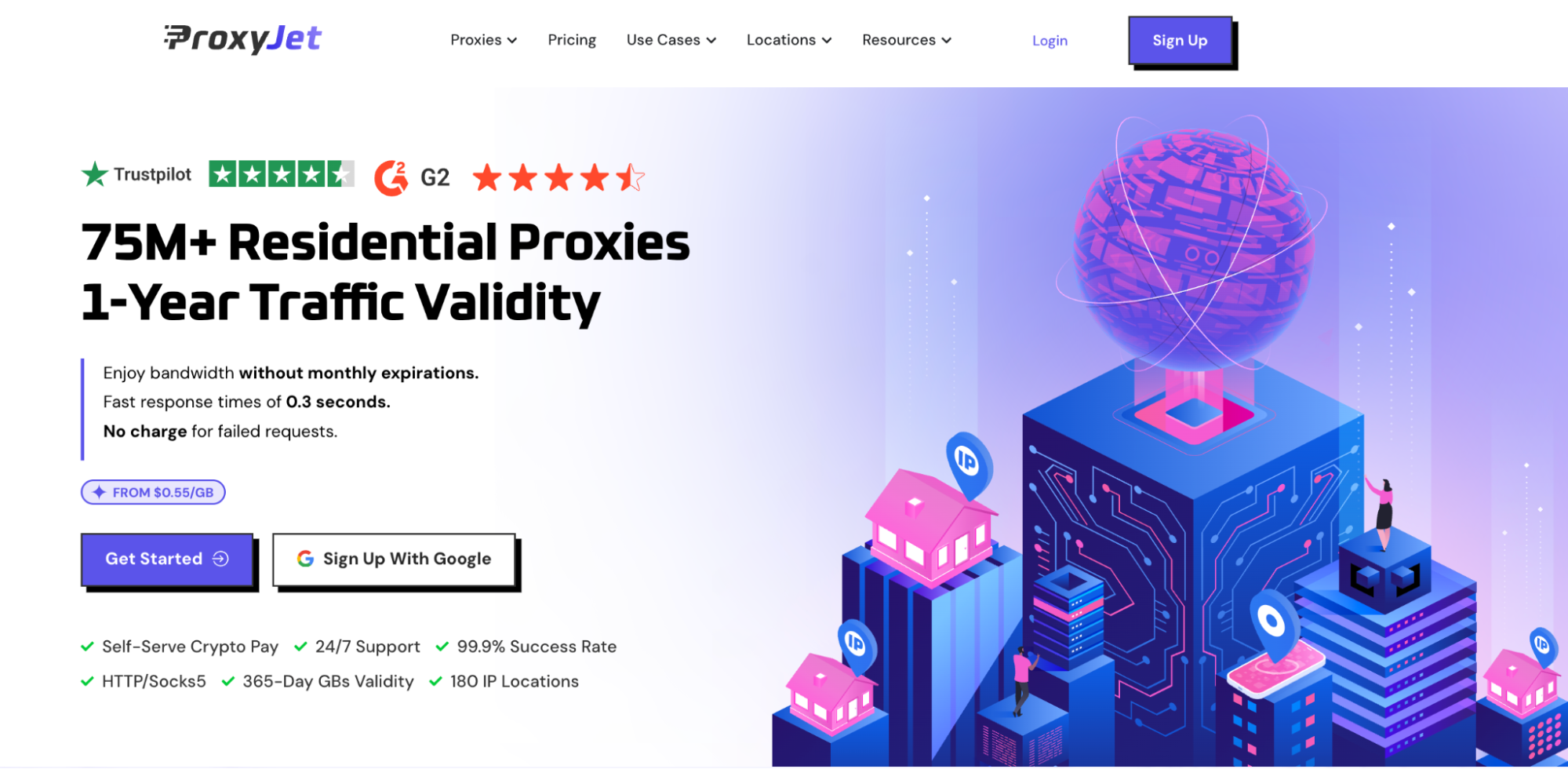
ProxyJet also highlights features like city and state targeting, even in self-service plans, which feels like a nice step up from Storm Proxies. That said, ProxyJet is still a relatively young provider compared to older brands, so while performance metrics are strong, there is less long-term data on fraud scores and reputation.
One standout feature with ProxyJet is that any data you purchase remains valid for 365 days. Unlike most providers, where unused traffic resets monthly, ProxyJet’s 1-year traffic validity means you don’t waste money if your usage fluctuates.
Key Features
| Feature | Details |
| IP pool size | 75M+ |
| Proxy types | Residential, Mobile, Datacenter |
| Locations | 180 countries |
| Protocols | HTTP, SOCKS5 |
| Success rate | 99.9% |
| Traffic validity | 365 days |
| Concurrent sessions | Unlimited |
| Free trial | No |
| Support | 24/7 |
Pricing
- Rotating residential proxies: from $3.25/GB
- Static residential proxies: from $7/GB
- Mobile proxies: from $8/GB
- Datacenter proxies: from $0.9/GB
Pros vs Cons
| Pros | Cons |
| No charge for failed requests. | Rather expensive pricing for a budget provider |
| 1-year traffic validity | Lower Trust scores |
| Fast connection speeds | Unclear IP sourcing |
| 24/7 Support | Advanced targeting options are limited |
| HTTP/Socks5 support |
Our verdict
ProxyJet is a solid pick if you want affordable bandwidth pricing and flexible traffic validity. It can work well as a backup provider or for everyday scraping tasks, but it may not pack enough punch to be your first choice
7. Coronium
And to close out our list, we have Coronium.
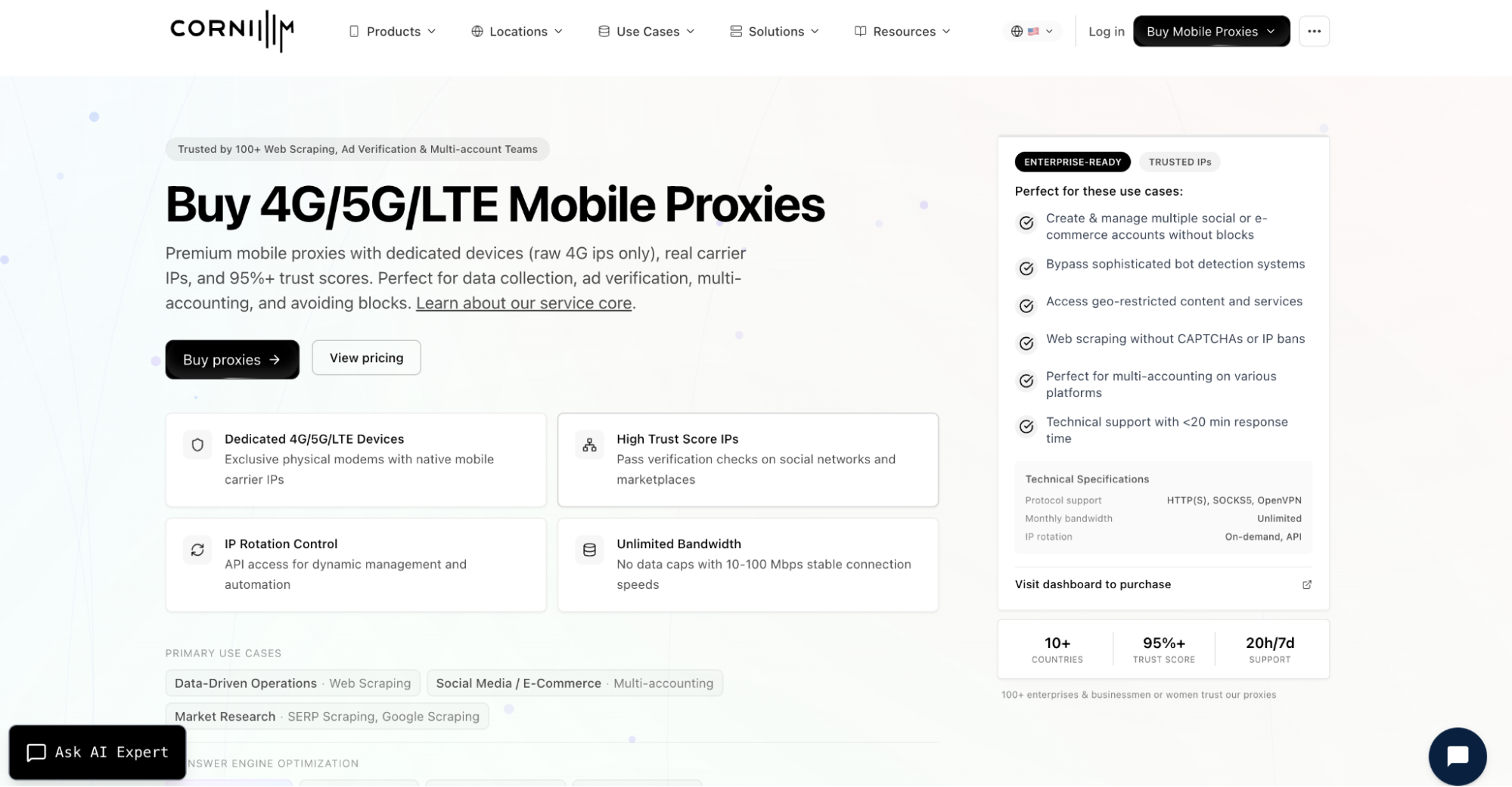
Coronium specializes in renting out private mobile devices as proxies. Each proxy is an exclusive 4G/5G modem with a SIM card that only you use, giving you a real mobile network IP with an extremely high trust score. It’s a premium setup, and it’s closer to having your own mobile proxy server in a target country.
Coronium also offers VPN services branded as “Residential VPNs”. This makes it appealing to a very niche subset of users who need both mobile proxies and VPN services. The service also includes a generous free trial with access to over 30 countries and full API access.
The downsides, however, stem from the lack of residential, ISP, and datacenter proxies. While their mobile proxies had very low fraud scores, they were far from the quickest we have tested, with speeds that felt average at best.
Key features
| Feature | Description |
| Proxy type | 4G/5G/LTE mobile carrier proxies |
| Locations | 30+ locations |
| Unlimited bandwidth | Available |
| Fraud scores | Low |
| Rotation | On-demand rotation via API or manual |
| Rotation time | 10–20 seconds per change |
| Supported Protocols | HTTP(S) / SOCKS |
| API access | Available |
| Infrastructure | Dedicated physical modems per customer (no IP sharing) |
| Support | 20-hour support, marketed as under 20-minute response time |
| Free trial | Available |
Pricing
Coronium is a premium service and is priced per proxy (per device) rather than per GB. Its pricing depends heavily on location, for example:
- UK: $69/month
- USA: $99/month
- Australia: $129/month
- Ukraine: $34/month
- Germany: $79/month
- Spain: $79/month
- Netherlands: $79/month
- Ireland: $59/month
- Romania: $49/month
- Brazil: $99/month
These prices are for one proxy (one device) with unlimited use. They also offer weekly options for some proxies if you need short-term access.
Pros vs Cons
| Pros | Cons |
| Very clean IP reputation | More expensive setup |
| Dedicated devices with no sharing | Mobile-only proxies |
| Unlimited bandwidth on all mobile proxies | Small location coverage |
| Full API access | Only 1 concurrent connection per port |
| VPN offerings | 20 hour support window instead of full 24/7 |
| Multi protocol support (HTTP(S), SOCKS5, OpenVPN) | VPN offerings are basic compared to standalone VPN providers |
Our verdict
While Coronium is expensive compared to Storm Proxies, you’re getting exclusive, extremely high-quality IPs. One proxy can often manage many accounts if used carefully, so the ROI can be strong for specialist use cases.
Honorable Mentions
The seven providers we’ve discussed are among the best direct alternatives to Storm Proxies, but there are a few honorable mentions worth considering as well.
8. Netnut
NetNut is an established provider known for proxies sourced directly from ISPs. It offers over 85 million IPs across roughly 195 countries, giving it one of the largest and most stable proxy networks available.
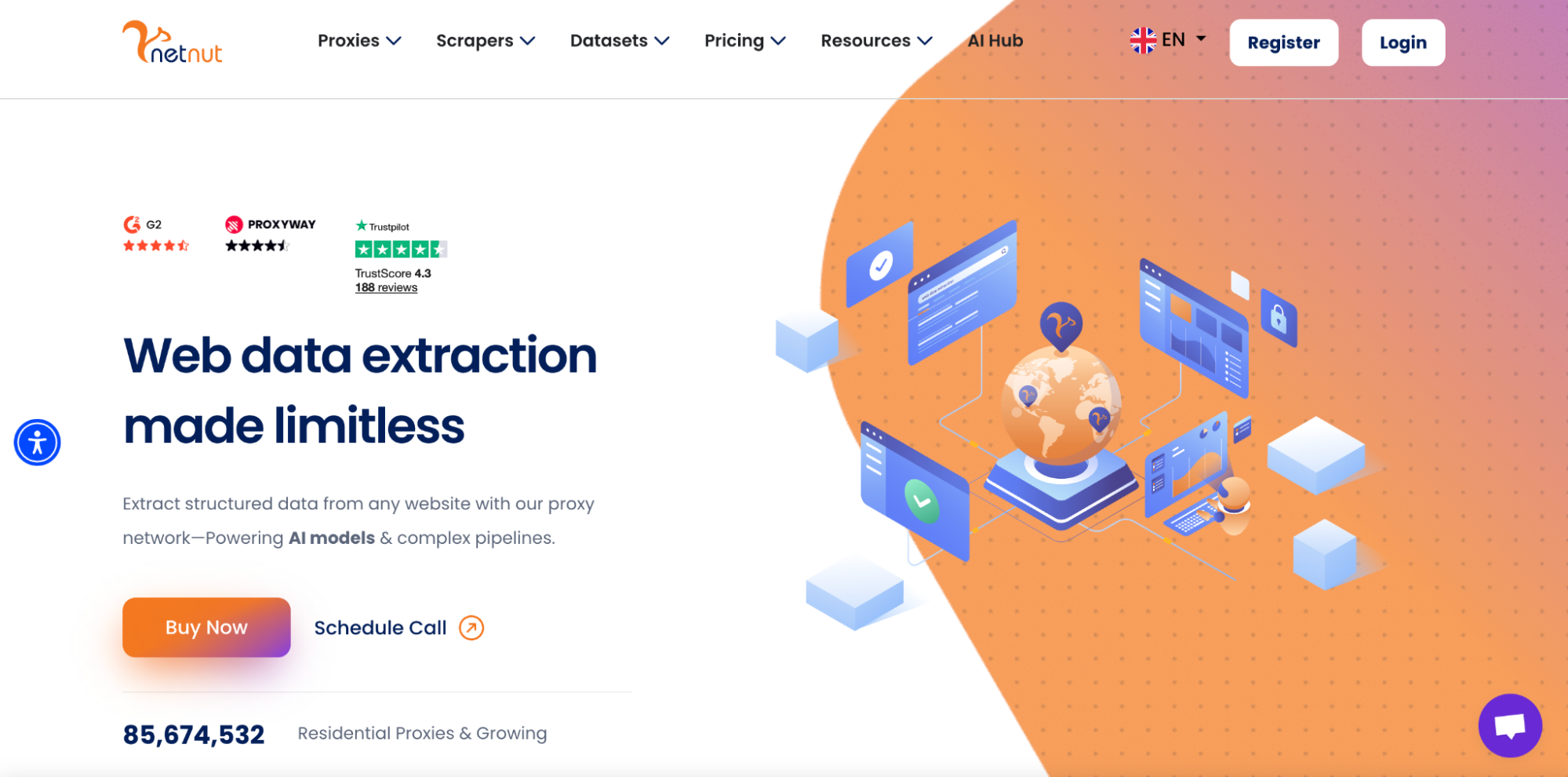
NetNut initially focused on enterprise clients but later introduced more affordable entry plans that made it a viable option for smaller businesses and regular users.
It’s great for heavy-duty web scraping and supports unlimited concurrent connections with very high throughput. However, the downside with this provider is its pricing. NetNut is still biased toward businesses, with paid plans starting at around $100/month, so it’s not the cheapest option. But if you need enterprise-grade performance and don’t mind paying for it, NetNut is a solid alternative. They also offer a 7-day free trial to test the service.
Pros:
- Fast speeds
- Large IP pool
- 7-day free trial
- Seamless AI and automation stack integration
Cons:
- Expensive starter plans
- Tedious free trial setup
- Strict KYC policy
9. Free ProxyList
If your main reason for using Storm Proxies was cost and you’re trying to spend as little as possible, you might consider free proxy services.
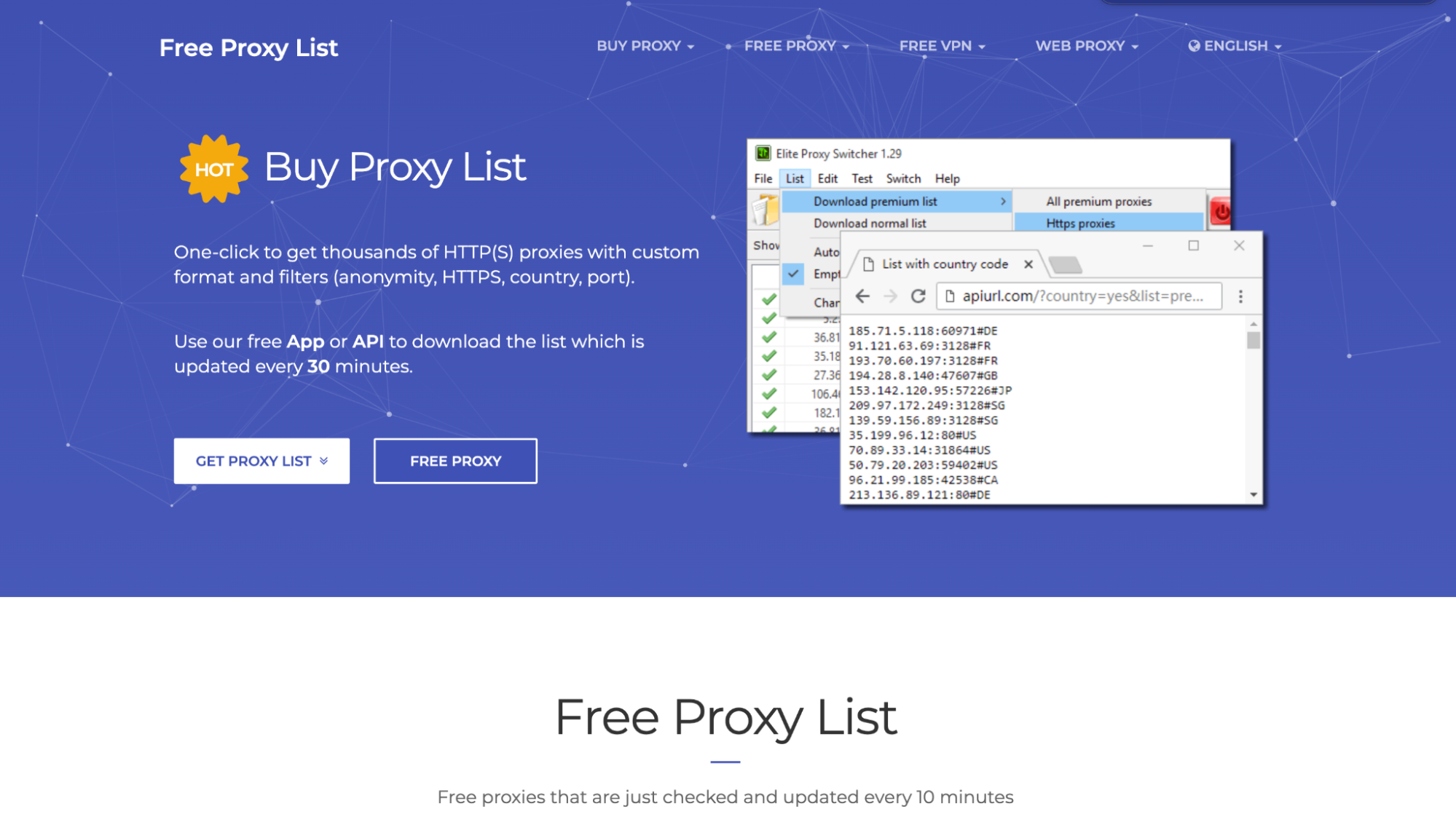
Free-Proxy-List.net provides access to thousands of rotating HTTP(S) proxies at a combined cost of $0. The nice part is that you can filter proxies by country or anonymity level, although you don’t get fine-grained targeting.
While using these proxies can give you access to hundreds or thousands of IPs without paying, you really want to be cautious. Free proxies are usually unreliable and slow; many will be dead on arrival or get banned quickly by target sites.
They can also pose security risks since you don’t know who operates them or what they might log. Because of this, free proxies are only really viable for low-stakes testing or quick experiments, and should not be used for serious or long-term projects.
Pros:
- No cost
- Unlimited usage (as long as you can find working proxies)
Cons:
- Extremely unstable and slow
- No SOCKS support
- No customer support
- High security and privacy risks
10. Proxyscrape
ProxyScrape deserves a mention because it offers both free and premium proxy services.
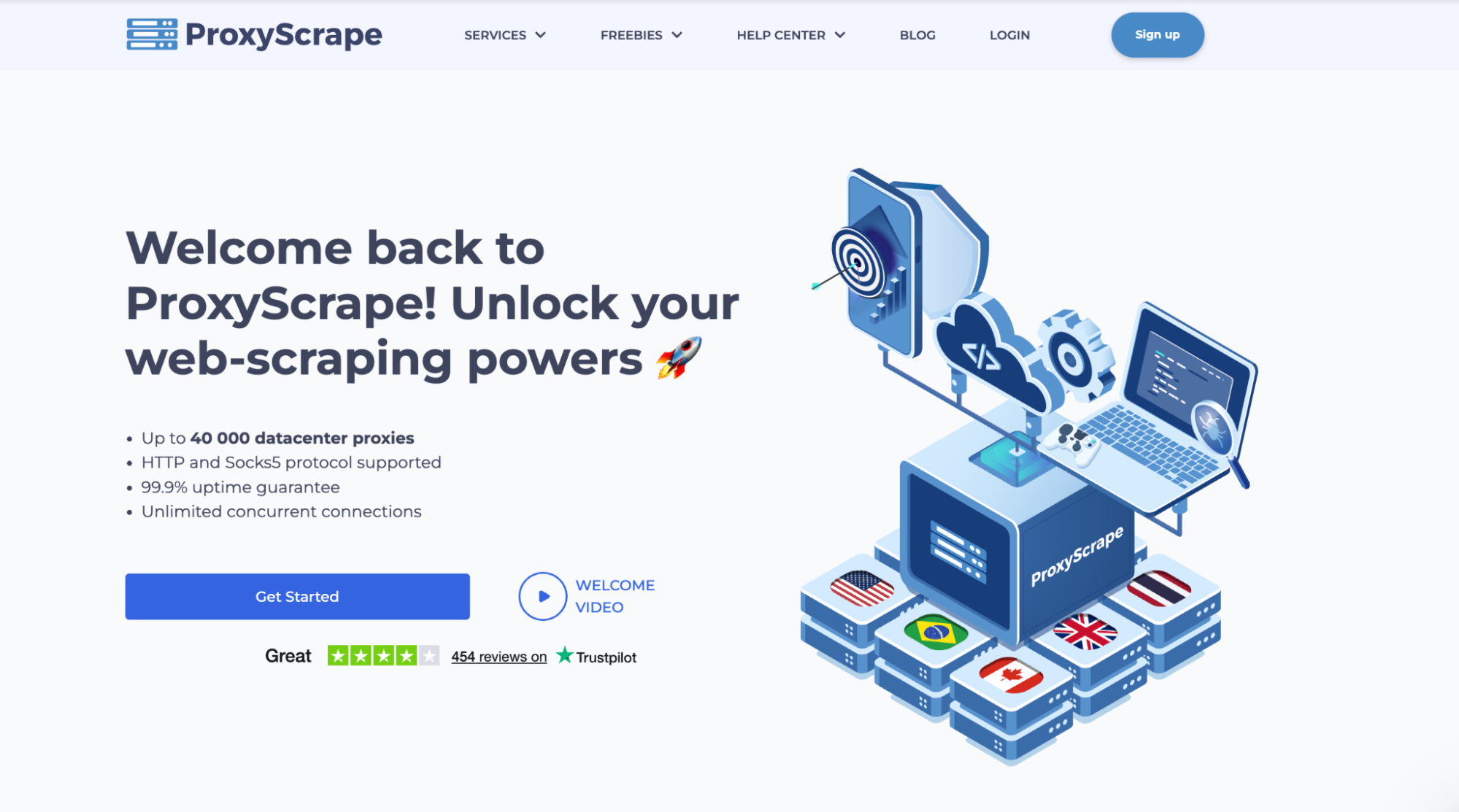
On the free side, it provides a popular proxy list that’s updated every few minutes, so you can grab open HTTP and SOCKS proxies quickly (with the usual caveats around reliability). These are best kept for testing only.
On the premium side, ProxyScrape sells several proxy products, including unlimited datacenter proxies (up to 40k IPs) on monthly plans, rotating residential proxies with a 55 million IP pool, and dedicated proxies.
Their pricing is generally more affordable than the bigger enterprise providers, and they also offer handy tools like an API, a proxy checker, and advanced filtering options.
Pros:
- free and paid plans
- User-friendly dashboard
- Built-in proxy checker and filtering tools
Cons:
- Free proxies are unstable and get blocked easily
- Premium features are less advanced than top tier providers
- Support and SLAs may feel limited for strict enterprise needs
Final thoughts
Storm Proxies can still work for basic tasks, especially if you want something simple and affordable. But once you need better targeting, more proxy types, or stronger performance on stricter websites, it starts to feel limited.
That’s why we listed the best alternative providers (plus a few honorable mentions) that offer better performance, more locations, and affordable pricing.
If Storm Proxies no longer meets your needs, Floppydata is the best go-to Storm Proxies alternative. You get flexible pricing, a clean all-in-one dashboard, and reliable support when it matters. Get started with Floppydata today for just $1.
FAQ
What are the best Storm Proxies alternatives in 2026?
Some of the best Storm Proxies alternatives include Floppydata, Proxy-Seller, MangoProxy, Shifter, ProxyJet, MarsProxies, and Coronium.
What is the best value-for-money Storm Proxies alternative?
For most users, Floppydata offers the best value for money. It starts at $1/GB, supports multiple proxy types, and offers flexible usage with non-expiring traffic.